USA Tariff Rates and Certifications
Tariff Rates by Country
Major US Trading Partners - Tariff Rates
Last Updated: February 24, 2026Official Data Sources & Trade References
Certification Requirements for Preferential Tariff Treatment
US Tariff Certification Requirements
Last Updated: February 24, 2026The United States-Mexico-Canada Agreement does not require a specific certificate form. Claims for preferential treatment must include nine minimum data elements as specified in USMCA Chapter 5, Annex 5-A, which may be presented on an invoice or any other document.
Required Data Elements (9 Minimum):
- Certifier's name, address, telephone, and email
- Exporter's name, address, email, and telephone (if different from certifier)
- Producer's name, address, email, and telephone (if different; or "Available upon request" or "Various" if multiple producers)
- Importer's name, address, email, and telephone (if known)
- Description and HS tariff classification of the good (6-digit level)
- Origin criteria under USMCA Article 4.2
- Blanket period (if applicable, up to 12 months) or indicate if certification covers a single shipment
- Authorized signature and date
- Country of origin
The U.S. Generalized System of Preferences program expired on December 31, 2020, and is currently pending Congressional reauthorization. GSP-eligible goods must pay "General" (column 1) duty rates until the program is renewed.
When Active, GSP Requirements Include:
- Form A (GSP Certificate of Origin) required for preferential treatment claims
- Goods must be wholly obtained or produced, or contain at least 35% value added in beneficiary country
- Direct importation requirement from GSP-eligible country
- Compliance with origin criteria per 19 CFR 10.171-10.178
Certain products are exempt from baseline reciprocal tariffs under Executive Order provisions. These exemptions are generally applied uniformly across non-Chinese trading partners.
Exempt Product Categories:
- Petroleum and crude oil – Essential energy products
- Industrial raw materials – Many foundational manufacturing inputs
- Pharmaceuticals – Most pharmaceutical products (excluding patented/branded drugs subject to 100% tariff unless US manufacturing commitments made)
- Industrial machinery – Various categories of production equipment
- Semiconductors – Semiconductors and chip-making equipment (under investigation)
- Aircraft and parts – Certain aviation products under bilateral agreements (e.g., UK)
- Agricultural products – Select food and agricultural goods
Derivative articles containing steel or aluminum may qualify for Section 232 tariff exemption if the base metals meet specific domestic processing requirements.
Exemption Criteria:
- Steel: Must be melted and poured in the United States
- Aluminum: Must be smelted and cast in the United States
- Certification of domestic processing required at time of entry
- 407 additional derivative products added to Section 232 coverage effective August 18, 2025
- Non-steel/aluminum portions may be reported separately but remain subject to reciprocal tariffs based on Country of Origin
All importers must comply with U.S. Customs and Border Protection requirements regardless of certification type or preferential treatment claims.
Importer Responsibilities:
- Declaration: Importer of record must properly declare value, classification, country of origin at time of entry
- Payment: Responsible for paying all applicable duties, taxes, and fees
- Documentation: Maintain and provide certification and supporting documentation upon CBP request
- Verification: Be prepared for customs audits and verifications
- Accuracy: Ensure all declarations and certifications are accurate and complete
Official Certification & Compliance References
HTS Code Search
HS Code Lookup
Last Updated: January 2026Official HS Code Resources
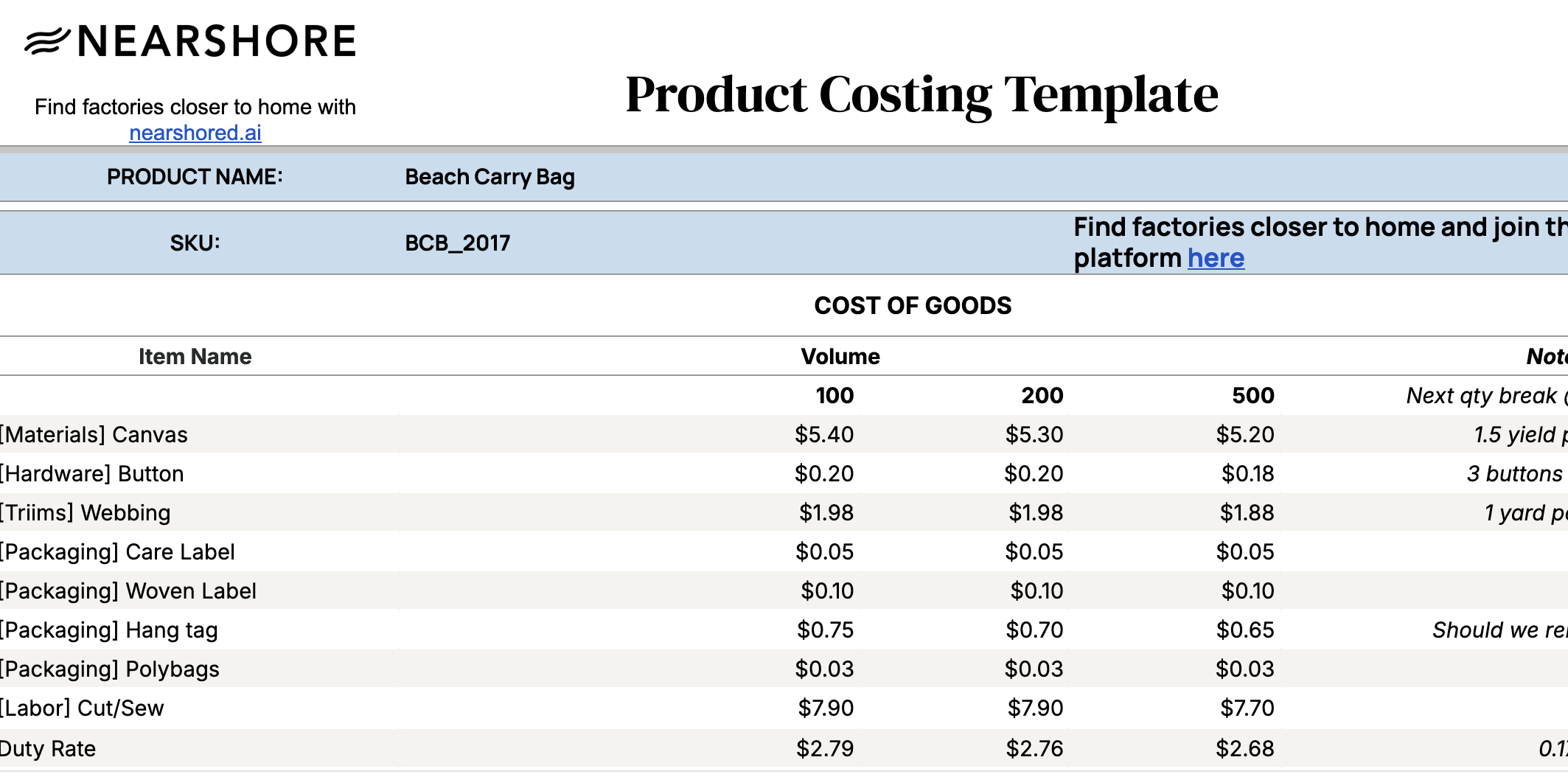
Download our Free Product Costing Template